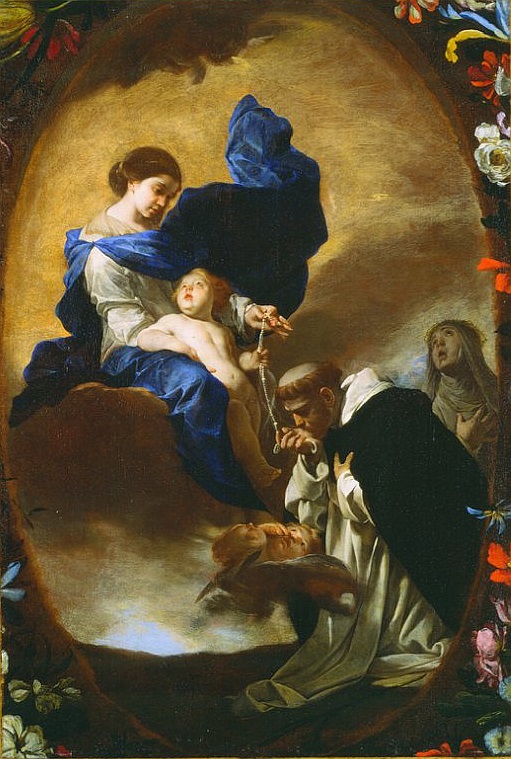
Every generation has wondered, at one point or another, whether the old prayers still fit the new world. The Rosary — with its beads and its repetition and its talk of mysteries — can seem, at first glance, like the kind of thing one’s grandmother kept in a drawer.
And then one prays it.
The Rosary is not an antique. It is a way of holding still in front of God for twenty minutes at a time, with the help of words your mind already knows. It uses repetition because repetition is how human beings actually quiet themselves — not by trying harder, but by giving the busy part of the mind a small, familiar job to do. The Hail Marys keep your hands and tongue occupied. Your heart, freed up, can then look at the scene of the mystery without distraction.
There is also something the Rosary does that no other prayer does in quite the same way: it walks you through the whole life of Christ in twenty minutes. From the angel’s greeting to Mary, to a stable in Bethlehem, to a garden in Gethsemane, to an empty tomb — in the space of one decade you can find yourself at any of them. The Rosary is not a series of words to be gotten through. It is a slow procession through the Gospel.
There are evenings when the only honest prayer you can make is a tired one. The Rosary is well-suited to a tired prayer. The words are already there; the structure is already there; the mysteries are waiting. All you have to bring is your presence. On other days, when the heart is full, the Rosary becomes a kind of trellis on which gratitude or grief or worship can climb.
It still matters because we still need a place to put the day. And because the Mother of God, who held Christ in her arms before any of us did, has been quietly handing us this prayer for centuries, asking only that we try.